
Each year, the University of Georgia Small Business Development Center (UGA SBDC) publishes its annual “Small Business and its Impact on Georgia” report to highlight the economic influence of small businesses and emerging industry trends.
This publication provides key data on Georgia’s 1.4 million small businesses, including insights into business owner and employee demographics and how the state’s shifting population trends may shape the future of small business.
Read our latest report below or download the PDF version here.
Small businesses remain the backbone of Georgia’s economy—driving innovation, creating jobs, and strengthening communities. In 2026, their role is more vital than ever. Across the state, these enterprises provide opportunities for families, first-time job seekers, and those seeking flexible careers. From high-tech startups shaping the future to trusted local service providers, small businesses fuel Georgia’s marketplace with creativity and entrepreneurial energy. Their influence reaches every corner—from bustling urban hubs to quiet rural towns—powering economic growth, fostering resilience, and opening doors to new possibilities for all Georgians.
Over the past five years, individuals who have sought assistance from the University of Georgia Small Business Development Center (UGA SDBC) have created more than 2,218 NEW BUSINESSES, added more than 15,074 JOBS, raised more than $1.27 BILLION IN LOAN AND EQUITY FINANCING and generated over $9.7 BILLION IN SALES.
According to the latest impact study, firms that have sought UGA SBDC assistance experienced JOB GROWTH OF 11.5% versus the 1.1% growth of a typical Georgia firm.
At the UGA SBDC, we believe small is great and have produced this report to cover some of the impacts small businesses have in Georgia. This publication provides an overall look at Georgia’s small business environment and shines the spotlight on several noteworthy trends happening in various regions of the state.
Most importantly, this publication helps illuminate the contributions made by Georgia’s entrepreneurs on the economic well-being of all Georgia citizens.
WITH 17 OFFICES ACROSS THE STATE, THE UGA SBDC PROVIDES EDUCATIONAL TRAINING PROGRAMS AND CONFIDENTIAL, ONE-ON-ONE CONSULTING TO SMALL BUSINESS OWNERS AND PROSPECTIVE ENTREPRENEURS.

# 1 – Best State to Do Business 1
# 2 – Best State to Start a Business 2
# 3 – Business Incentive Programs 1
# 1 – Favorable Regulatory Framework 1
# 2 – Workforce Training Programs 1
# 3 – Access to Qualified Labor1
# 1 – Logistics & Infrastructure 1
# 2 – Energy Availability 1
Georgia small business employment grew by 26% from 1998 to 2022, exceeding the national small business employment growth rate.3 The state’s unemployment rate is at 3.4%, lower than the national unemployment rate of 4.4%.4
From March 2023 to March 2024, small businesses in Georgia gained 348,076 jobs and lost 302,125 for a net increase of 45,950 jobs.3
Small business employees make up 42.5% of Georgia’s employees, with small businesses accounting for 99.7% of Georgia businesses overall.3
EMPLOYERS | EMPLOYMENT | PAYROLLL ($1,000s) | ||||
|---|---|---|---|---|---|---|
TOTAL | 199,431 | 97.7 | 1,806,632 | 42.5 | 94,151,658 | 36.2 | INDUSTRY | SMALL | % | SMALL | $ | SMALL | % |
Professional, Scientific and Technical Services | 29,776 | 97.9 | 168,601 | 50.9 | 13,722,866 | 43.4 |
Retail Trade | 22,674 | 97.9 | 154,059 | 30.6 | 6,662,057 | 38.3 |
Other Services (except Public Administration) | 22,112 | 99.1 | 134,695 | 83.4 | 5,074,022 | 79.0 |
Construction | 21,158 | 99.0 | 161,509 | 77.7 | 10,504,951 | 72.4 |
Health Care and Social Assistance | 20,766 | 98.3 | 246,539 | 44.2 | 12,327,656 | 37.0 |
Accommodation and Food Services | 17,322 | 98.2 | 277,660 | 62.3 | 6,087,095 | 61.7 |
Real Estate and Rental and Leasing | 11,784 | 98.2 | 42,402 | 42,402 | 55.6 | 45.9 |
Administrative, Support and Waste Management | 11,632 | 95.6 | 124,825 | 28.1 | 5,900,879 | 27.0 |
Wholesale Trade | 9,383 | 92.1 | 103,059 | 47.2 | 7,722,866 | 44.2 |
Finance and Insurance | 8,067 | 94.8 | 52,530 | 27.1 | 4,523,149 | 21.6 |
Transportation and Warehousing | 7,684 | 94.6 | 62,649 | 23.8 | 3,208,859 | 20.9 |
Manufacturing | 6,273 | 90.8 | 135,449 | 33.6 | 7,364,022 | 30.5 |
Arts, Entertainment and Recreation | 3,807 | 98.3 | 34,287 | 60.5 | 1,065,750 | 44.9 |
Educational Services | 3,078 | 97.3 | 50,850 | 57.0 | 1,868,322 | 43.1 |
Information | 2,808 | 90.6 | 32,409 | 25.8 | 3,103,008 | 21.0 |
Agriculture, Forestry, Fishing and Hunting | 914 | 98.8 | 6,573 | 84.0 | 345,812 | 83.2 |
Management of Companies and Enterprises | 478 | 49.7 | 9,849 | 7.6 | 972,342 | 6.1 |
Industries Not Classified | 369 | 100.0 | 436 | 100.0 | 19,405 | 100.0 |
Utilities | 142 | 83.5 | 7,196 | 29.0 | 706,861 | 27.0 |
Mining, Quarrying, and Oil and Gas Extraction | 86 | 81.1 | 1,055 | 20.3 | 71,758 | 18.3 |
Georgia’s small business landscape reflects a broad and growing diversity among the state’s entrepreneurs. According to a recent study from the U.S. Small Business Administration Office of Advocacy, women own 48.4% of Georgia businesses, including 44,187 employer firms led by female owners.3
The state is also home to 690,089 minority-owned businesses, positioning fifth in the nation for states with the most minority-owned businesses.3,5
Georgia population growth continues to fuel this entrepreneurial activity. The state’s estimated population reached 11,180,878 in 2024, a 4.4% increase since 2020—outpacing the national growth rate of 2.6% over the same time period.3
The population of Georgia – which equalled 11,180,878 in 2025 – has grown 4.4% since 2020, compared to overall US population growth of 2.6%.6
Specialty agriculture remains a pillar of Central Georgia’s rural economy, driven by high value crops such as peaches, pecans and the rapidly expanding blueberry industry. Although Georgia is known as the “Peach State,” blueberries have surpassed peaches as the state’s top fruit in recent years, reflecting shifting market dynamics and growers’ increasing reliance on frost-resilient crops.
Meanwhile, Georgia continues to lead the nation in pecan production, often contributing about one-third of U.S. annual output. These crops generate significant farm income and sustain a wide network of small businesses—from family farms and roadside markets to processors, equipment dealers and logistics firms.8,9,10
Small agribusiness suppliers form the backbone of specialty crop production in Central Georgia. Independent fertilizer and chemical dealers, irrigation specialists, nurseries, and agronomy consultants ensure orchards and groves have the resources and technical guidance needed for strong yields. Facing labor shortages and climate variability, growers are adopting more mechanization and precision tools. Blueberry producers now widely rely on overhead irrigation and wind machines for frost protection, and peach and pecan operations are expanding drip irrigation and integrated pest management. These local suppliers not only provide equipment, but offer service, training, and long-term support—helping family-owned farms stay competitive and sustainable. 11,12,13
Post-harvest processing continues to strengthen Central Georgia’s specialty agriculture supply chain. Pecans flow into small and mid-sized shelling, packaging, and confection businesses that prepare nuts for domestic and international buyers. Peach packing sheds—often family-owned or cooperative—support grading, cooling and packing operations that keep fruit fresh and market ready. The growth of value-added food makers, including producers of pecan snacks, peach jams and baked goods, extends the market season and keeps more profit circulating within local communities.10,14 As specialty crops expand, these processors are well positioned to grow alongside them, creating new jobs and product lines.
Efficient logistics are essential to the region’s specialty crops. Peaches, which must reach grocery stores within 24–48 hours of harvest, depend on regional refrigerated trucking companies to maintain quality. Pecans and other less-perishable commodities rely heavily on the Port of Savannah, a key export channel to international markets, supported by local freight brokers and export specialists. Rising blueberry production has led to investment in new cold-storage facilities and distribution centers, many launched by local entrepreneurs. Enhancements to cold chain systems, trucking efficiency, and cooperative marketing will be increasingly important as volumes grow. 14,15
Agritourism continues to offer farmers a direct link to consumers while boosting rural tourism. U-pick orchards, farm stands, festivals, and on-site food sales create additional revenue streams and seasonal employment. These venues draw visitors who also spend money at nearby restaurants, shops and lodging, generating a meaningful multiplier effect within rural communities.16
Growth in Central Georgia’s specialty crops sector will generate entrepreneurial opportunities for agri-tech, food processing, logistics and agritourism. Agri-tech startups will help growers manage freeze risk, irrigation efficiency and crop diseases.11,12 Small food makers will expand the “Georgia Grown” brand with premium, locally inspired products. Logistics firms will adapt to handle greater volume, while agritourism remains vital for strengthening public engagement with agriculture. With more than 95% of Georgia farms family owned, this growth will continue to flow through local entrepreneurs—supporting rural livelihoods and ensuring specialty agriculture remains a driving force in the region’s economy.
Stuckey’s has been a roadside oasis for U.S. travelers since 1937. Known for their iconic pecan log roll, they turned to the UGA SBDC for help when they were looking for property to house a pecan shelling plant and a candy plant. With UGA SBDC support, they developed a strategic business plan and obtained funding for their new facility.
The coastal region of Georgia, anchored by the Port of Savannah, has become one of the nation’s most dynamic logistics hubs. Driven by strong port activity, significant infrastructure investments and a robust network of logistics providers that includes many small and mid-sized firms, the region plays an increasing central role in the state’s economic development.
The Port of Savannah is the fastest-growing container port in the United States and the largest single-terminal container facility in North America.17 In 2022, it handled a record 5.9 million 20-foot equivalent units (TEUs), a record for the port,18 and despite modest normalization in 2023, volumes remained roughly 20% above pre-pandemic levels.19 Momentum continued into 2025, with August marking the third-highest monthly volume on record.20 These consistently high volumes underscore the port’s importance as a gateway for global trade.
Several macro trends continue to shape the region’s growth trajectory. Post pandemic normalization has stabilized cargo flows, while ongoing supply chain reconfigurations have shifted freight from West Coast ports to East Coast gateways, like Savannah.17 At the same time, strong retail and e-commerce demand has driven unprecedented warehouse development. Savannah now has over 159 million square feet of warehouse space, with millions more under construction to support distribution and fulfillment facilities.17 Logistics remains one of Georgia’s most economically significant industries. In 2021, the sector generated $83.4 billion in output, up from $60.7 billion in 2018,21 and supports more than 650,000 jobs—roughly one in eight statewide.22
Continuous infrastructure improvements have reinforced Savannah’s competitive edge. The Savannah Harbor Deepening project, completed in 2022, enables larger vessels to call with heavier loads.19 The Mason Mega Rail Terminal doubled on-dock rail capacity, enhancing inland connectivity.23 Ongoing upgrades —including the conversion of Ocean Terminal to container operations and plans to raise the Talmadge Bridge—signal long-term commitment to capacity and efficiency.19,23 These investments position Georgia as a strategic gateway: businesses can reach 70% of the U.S. market within two days by truck, enabling faster delivery times for shippers and distributors.17
While larger importers and retailers headline volumes, small businesses represent the majority of port users. More than 91% of the Port of Savannah’s customers ship fewer than 100 TEUs annually, reflecting the thousands of small and mid-size firms that use the port to reach global markets.24 Small manufacturers and agricultural exporters benefit from reliable outbound capacity, while smaller importers gain supply chain stability and cost savings.24
Indirectly, the logistics boom fuels small businesses across trucking, freight forwarding, warehousing, equipment maintenance and supply chain technology.22 Innovation support organizations—such as the Savannah Logistics Innovation Center21 and Georgia’s Center of Innovation for Logistics25—provide resources that help small firms to innovate and scale.
The outlook for Coastal Georgia’s logistics sector remains strong. Continued expansion of port infrastructure, combined with growth in e-commerce, sustainability initiatives, and supply chain diversification will sustain momentum. Emerging technologies —AI-driven routing, warehouse robotics, and advanced freight visibility tools—will further enhance efficiency.26
For small businesses, these developments offer expanding opportunities in subcontracting, technology services, distribution and multimodal logistics. As Georgia continues to lead the nation in business climate rankings, the coastal logistics sector will remain a critical engine of statewide economic development.
When Brianna and Jason Wilson purchased a small staffing company in 2013, they saw more than just a business opportunity—they saw a chance to make a difference in their community. Today, Southern Point Staffing offers staffing solutions for temporary and career-focused positions, along with payroll services, employee training and screening. With UGA SBDC support, the Wilsons have doubled their workforce, grown revenue by more than 50% and are on track to open a new location in Savannah.
Coastal Georgia’s manufacturing sector has become a powerful driver of economic growth, fueled by large-scale investments, expanding industrial capacity and strong public-private collaboration. Centered in Savannah and surrounding counties, the industry now plays an essential role in job creation, supply chain development and small business opportunities across the state.
Manufacturing accounted for 18.5% of the Savannah metro area’s GDP in 2023, generating roughly $6 billion in output—a substantial increase tied to accelerated post-2020 industrial expansion.27 The region’s momentum is anchored by projects such as the Hyundai Motor Group Metaplant, a $7.6 billion electric-vehicle facility expected to create 8,500 jobs, making it the largest economic development project in Georgia’s history.27
The region’s 510 manufacturing establishments range from major global firms—Gulfstream Aerospace, JCG, and Hyundai suppliers—to small and mid-sized producers of components, materials and specialty goods.28 This diversified base makes the sector more resilient and ensures that small businesses remain deeply connected to production networks.
Manufacturing employment has grown 25% since 2022, reaching nearly 29,600 workers by mid-2024. Average weekly wages now exceed $1,700, reflecting the advanced skill sets required for aerospace and advanced manufacturing roles.29 Transportation equipment manufacturing accounts for more than 83% of new positions, driven by Gulfstream’s expansion and Hyundai’s rapidly developing EV supply chain.29
The rapid expansion has created workforce challenges. Labor demand is outpacing supply, and regional manufacturers continue to report shortages of qualified technicians and tradespeople. Entry-level wages have increased nearly 20% in two years, which benefits workers but challenges smaller firms competing with larger employers for talent.30
To address these gaps, regional stakeholders have introduced new training and initiatives. The Regional Industry Support Enterprise (RISE) brings eight counties together to address 18.5% childcare, transportation and housing barriers that directly affect small business employees.3 Savannah Technical College’s new EV Professional Certificate and the state’s Quick Start-supported Hyundai Mobility Training Center are strengthening the talent pipeline for EV and advanced manufacturing roles. 31,32
Infrastructure investment continues to reinforce the region’s competitiveness. The Port of Savannah, the busiest container port on the East Coast, has expanded rail and warehousing capacity to support manufacturers’ imports and export needs.28 State transportation upgrades—including improvements to major freight corridors such as the I-16/I-95 interchange—further enhance logistics efficiency.28
Innovation is accelerating. Hyundai’s new smart EV factory integrates robotics and IoT technologies, while Gulfstream continues research into next-generation aircraft. Smaller firms are embracing automation, advanced machining and digital tools often supported by state programs such as the Georgia Center of Innovation for Manufacturing, which provides technical consulting and industry connection.33
The outlook for Coastal Georgia’s manufacturing sector remains strong. With continued EV production ramp-up, aerospace expansion, and ongoing investments in training and infrastructure, the region is positioned for sustained growth. For small businesses, opportunities exist in supply chain services, precision production, construction, logistics and technical support. Strategic workforce initiatives and strong industrial partnerships will be essential to ensuring small firms can compete, innovate and grow alongside the region’s largest manufacturers.
When Flint Technical Geosolutions (FTG), based in Metter, was ready to expand internationally, President William Smallwood turned to the UGA SBDC for guidance and expert support. Through the UGA SBDC’s International Trade Center, Smallwood was able to navigate the complexities of expanding overseas—a move that generated an additional $2 million in revenue for the business.
When it comes to agriculture in Georgia, poultry rules the roost. Long recognized as the nation’s top poultry producing state, Georgia’s poultry sector—broilers and eggs combined—accounts for roughly 40% of Georgia’s total farm commodity value. This dominance translates into an annual economic impact exceeding $25 billion annually, making poultry not only Georgia’s leading agricultural product but a critical driver of jobs and investment.34,35
On any given day, Georgia farmers produce an astonishing 30 million pounds of chicken and nearly 14 million eggs. Broiler chickens alone generated about $6.6 billion in farm-gate revenue in recent years, with eggs adding another $960 million. These figures underscore the industry’s scale and importance to both rural communities and the state economy.34,35
Consumer demand for chicken remains robust. In 2024, U.S. annual per capita chicken consumption surpassed 100 pounds for the first time, reflecting chicken’s enduring appeal as an affordable protein compared to higher-priced beef. Analysts expect this trend to continue, buoyed by chicken’s cost advantage and versatility. Industry leaders in Georgia are optimistic: as long as farms remain financially viable, the future of poultry production looks bright.36
The heart of Georgia’s poultry industry beats in the northern region. Approximately three-quarters of the state’s poultry is raised in North Georgia, where counties like Hart, Madison, Oglethorpe, Jackson and Banks dominate production rankings. Hall County’s Gainesville proudly wears the title of “Poultry Capital of the World,” hosting numerous poultry processing plants and allied businesses that form a complete supply chain—from hatcheries and feed mills to equipment supplies and trucking firms.37,38
The concentration of infrastructure has attracted both homegrown companies and national giants. Georgia-based firms such as Fieldale Farms, Claxton Poultry, and Mar-Jac Poultry have grown local operations into major players, while national leaders like
Tyson Foods and Pilgrim’s Pride maintain a strong presence. Pilgrim’s Pride alone operates seven facilities in Georgia and supports about 7,500 jobs statewide.37,39
While larger integrators dominate processing and marketing, the raising of chickens largely rests with independent small farmers. Under the contract farming model, integrators provide chicks, feed and technical support, while local growers—often family run operations—raise birds to market weight. Georgia is home to roughly 3,200 contract poultry farms, each representing a small business deeply tied to its community.37,40
These partnerships provide stability for growers and ensure a steady supply for processors. Integrators often assist with financing for farm upgrades and provide veterinary or technical expertise, helping small farms remain competitive. The ripple effect is significant: a single processing plant often serves as the largest employer in its area, anchoring hundreds of grower families and supporting numerous local service providers.37,41,42
Beyond farms, the poultry industry sustains a network of small businesses across North Georgia. Feed mills, trucking companies, equipment manufacturers, cold storage providers, and engineering firms all play vital roles in the supply chain. Many enterprises are locally owned, create jobs, and fuel regional economic growth.37
The poultry sector in Georgia remains a major force in Georgia’s economy, offering stability and growth potential. With strong consumer demand, integrated supply chains and deep-rooted partnerships between larger companies and small businesses, the outlook for 2026 is positive. For stakeholders, from farmers to service providers, the opportunities within the thriving ecosystem are substantial.
Launched in November 2021 to address the business management-related areas of risk in agriculture, the UGA Master Agri-Manager Program helps participants think strategically about their farming and agribusiness operations. Sessions, led by UGA Extension agents and UGA SBDC business consultants, address topics ranging from strategic planning to cost analysis and are tailored to help meet the evolving needs of Georgia’s producers.
North Georgia’s tourism sector is riding a wave of momentum that shows no sign of slowing down. Following a robust post-pandemic recovery, Georgia’s travel industry has not only rebounded but reached record heights. By 2024, U.S. travel demand surpassed pre-2020 levels, and Georgia mirrored this trend with its third consecutive year of record-high visitation. The state welcomed 174.2 million domestic and international visitors who spent $45.2 billion at the state’s hotels, restaurants, attractions, transportation and other local businesses. Tourism now ranks as Georgia’s second-largest economic contributor, generating an $82 billion total economic impact statewide and supported about 1 in every 15 jobs statewide.43,44
The North Georgia region, known for its scenic Blue Ridge Mountains, waterfalls, wineries and historic towns, has been a major beneficiary of the surge. Governor Brian Kemp has credited Georgia’s diverse landscapes—from coasts to mountains—for attracting travelers in record numbers.45 Nature-based tourism remains a key driver, with Georgia’s state parks logging a record 14.2 million visits in 2023.46 Many of these parks are in North Georgia, reinforcing the region’s appeal for outdoor enthusiasts.
Local data underscores this growth. Walker County, part of northwest Georgia’s mountain corridor, saw visitor spending jump 19.1% in 2024 compared to the previous year.47 This trend reflects a broader shift towards rural and mountain destinations as travelers seek authentic, small-town experiences over urban centers.
North Georgia’s tourism success is fundamentally a small business story. Visitors flock to the region for its Appalachian charm and its local entrepreneurs who deliver that experience. Boutique inns, family-run restaurants, craft breweries, outfitters and artisan shops form the backbone of the visitor economy.48
Festivals and community events further amplify this impact. Dahlonega’s annual Gold Rush Days, for example, draws thousands of visitors each October, with local businesses extending hours and offering regional specialties.49 Even out of season, towns like Blue Ridge and Helen host farmers markets and “First Friday” events that blend tourism with community life. This personalized hospitality has become a hallmark of North Georgia tourism, creating repeat visitors and strengthening the region’s reputation as a welcoming destination.
Tourism dollars in North Georgia ripple far beyond lodging and dining. A 2024 study in Walker County found visitor spending spread across recreation, retail and transportation as well, with retail seeing the largest year-over-year gains.47 A family visiting Blue Ridge might rent a cabin, dine at a local restaurant, shop downtown, book outdoor adventures and fill up at a gas station—injecting cash into multiple sectors.
Tourism also strengthens ties with agriculture and the arts. The rise of farm wineries and craft breweries means visitor spending supports local farmers and brewers. Restaurants source ingredients from nearby farms creating farm-to-table experiences, while galleries and music festivals channel tourism dollars to artisans and performers. According to the University of Georgia, lodging and food service—industries dominated by small businesses—have seen double-digit growth since 2020, underscoring tourism’s role in fueling entrepreneurship.50
With strong consumer demand for outdoor recreation and authentic experiences, North Georgia’s tourism outlook for 2026 remains positive. Continued investment in infrastructure, marketing and community events will be critical for sustained growth. For small businesses, the opportunity is clear: tourism is not just a seasonal boost but a cornerstone of economic vitality. Every visitor arrival brings new dollars that circulate through local economies, supporting livelihoods and fostering innovation.
As Georgia continues to break tourism records, North Georgia’s mountains and towns are poised to remain a top destination, powered by small businesses that make the region unforgettable.
Revival Hall Taproom in Jefferson is more than a place to enjoy craft beer—it’s a hub for community connection. With guidance from the UGA SBDC, owners Mike and Jessie Martin secured SBA financing, launched Revival Hall in 2019, and later opened Flourish Taproom in Braselton. Known for live music, trivia and charitable events, the Martins’ success highlights how small businesses can strengthen North Georgia’s tourism and sense of community.
By Mark Lupo, Senior Public Service Associate

MEET THE EXPERT: Mark Lupo is a Senior Public Service Associate with the University of Georgia Small Business Development Center, where he has served since 2005. He is nationally certified as a Master Business Continuity Professional through the Disaster Recovery Institute International and earned his Certified Business Continuity Professional designation in 2009. Mark also holds the CompTIA Security+ certification. In recognition of his contributions, he received the 2021 UGA Walter Barnard Hill Award for Distinguished Achievement in Public Service and Outreach. Passionate about helping organizations strengthen their resilience, Mark works closely with community partners to identify strategies and resources that build robust cybersecurity infrastructures and improve preparedness against today’s evolving threat landscape.
Want to gain practical skills and actionable insights for your business? Click here to check out training opportunities from the UGA SBDC at https://georgiasbdc.org/training.
After the devastation of Hurricane Katrina in 2005, Gen. Russel L. Honoré, who led U.S. military’s relief efforts, advocated for the creation of a “culture of preparedness.” In today’s era of artificial intelligence (AI) and increasing cybersecurity threats, small business owners need to develop a similar “culture of cybersecurity.” The risks have never been greater, nor the attack surfaces broader. From the online platforms and social media to AI-driven tools, the potential threat for a digital breach is ever more pervasive.
Small businesses also face increasing requirements from larger corporations and government entities to demonstrate cybersecurity readiness before joining their supply chains. The Department of Defense’s Cybersecurity Maturity Model Certification (CMMC 2.0) is a prominent example of this type of requirement.
While compliance can be costly, prioritizing cybersecurity offers significant rewards. Not only does it create more secure environment for the business’s information architecture but also enhances its marketability by demonstrating a serious commitment to protecting entrusted data.
10 EASY CYBERSECURITY TACTICS FOR SMALL BUSINESSES
AI has expanded the threat landscape with deepfakes, sophisticated phishing and social engineering tactics. Yet cybersecurity fundamentals remain critical. Here are 10 practical steps—many minimal or no cost—to jump-start your business’s information security plan:
TURN CYBERSECURITY INTO A COMPETITIVE ADVANTAGE
The importance of implementing these steps cannot be overstated. Together, they create a defense-in-depth structure, layering protections to safeguard your more sensitive information. In an era of AI and increasingly sophisticated threats, returning to these fundamentals can strengthen your information security and help build a resilient “culture of cybersecurity.”
CYBERSECURITY FACTS & STATS
Cyber Threat Reality Check
The Financial Risks of Cyberattack for Small to Medium Businesses (SMBs)
Cyber Defense Toolkit
Top four cybersecurity tools currently adopted by SMBs52:
UGA CyberArch Program
UGA CyberArch helps Georgia communities and businesses strengthen cybersecurity. This collaborative program offers free cybersecurity risk reviews for partners such as K-12 schools, local governments, rural hospitals, and small businesses. Reviews are conducted by student teams using CIS Security Controls (v8.0) and include an onsite visit. Each engagement concludes with a confidential report and recommendations to improve security.
Launched in 2017, UGA CyberArch now involves multiple UGA units, undergraduate interns, and graduate research assistants. Led by the UGA Carl Vinson Institute of Government, the program supports local leaders in managing cyber risks. UGA CyberArch also partners with the UGA Archway Partnership, connecting communities to UGA resources, and the UGA Small Business Development Center, which provides expert consulting to help businesses grow securely.
Need assistance evaluating the risk level of your business? Take the first steps toward better cybersecurity with UGA CyberArch.
Opportunities abound for small businesses in Georgia. Learn how the UGA Small Business Development Center is fostering entrepreneurial success across the state.

Family nurse practitioner Biana Pope launched Golden Isles Family Healthcare to provide compassionate, prevention–focused care for families in Glynn County.
With limited business experience, she turned to the UGA SBDC for guidance on financial management, cash‑flow planning, staffing, and long‑term strategy. The team also helped her secure financing and a downtown development grant to purchase and renovate a permanent clinic.
Since 2021, the practice has expanded to eight full-time employees and strengthened its operations and community impact.
For nearly 60 years, Cooper Machine Company has built high‑quality sawmill, pallet and cooperage equipment for customers across the U.S. and abroad.
Founded in 1965 by Billy Cooper in Wadley, the third‑generation manufacturer is now led by CEO Frances Cooper, who carries on her family’s legacy mentored by her father, Robert.
As the company faced challenges recruiting skilled mechanical engineers, Cooper turned to the UGA SBDC for support to help the business address workforce needs and continue its long‑standing growth.

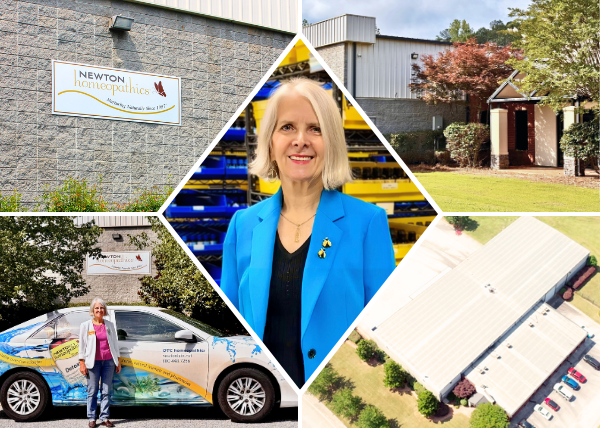
Newton Homeopathics, an FDA‑registered homeopathic manufacturer based in Conyers, serves customers nationwide. As the business grew, owner Marjorie Roberts turned to the UGA SBDC for help improving cash flow, updating pricing, strengthening bookkeeping practices and managing inventory more efficiently.
They also supported her in revitalizing the company’s digital marketing and expanding online outreach.
With these improvements, Newton boosted her company’s profitability, increased direct‑to‑consumer engagement and is projecting a 100% increase in online sales.
Melinda “The Chicken Lady” Newton has spent over 20 years transforming her family’s culinary heritage into a thriving Columbus enterprise.
After revitalizing Minnie’s Uptown Restaurant, she launched a growing portfolio that included her second venture, The Chicken Lady’s COOP, along with a product line, food truck and catering service.
In 2022, Newton turned to the UGA SBDC to pursue CARGO, a bold 6.5‑acre, $6 million dining destination projected to create up to 450 jobs and drive major local economic impact.


Founded in 1929 by Henri Fiscus, Henri’s Bakery & Deli has been a beloved Atlanta institution for generations.
Under the leadership of fourth‑generation owner Anthony DiNardo, the business has navigated major operational challenges and pursued strategic expansion with guidance from the UGA SBDC.
Henri’s has expanded to seven locations across Atlanta, with plans to further grow across North Georgia. For DiNardo, the most rewarding part is creating spaces where people come together over great food and developing the next generation of leaders within his team.
The University of Georgia Small Business Development Center (UGA SBDC) provides business training and consulting services to help small businesses grow and succeed. Working with chambers of commerce, lending institutions and other business development organizations, the UGA SBDC educates business owners on how they can grow their businesses, as well as helps aspiring entrepreneurs improve their chances for success.
Considered to be one of the state’s top providers of small business assistance, the UGA SBDC can help in the areas of business planning, market development, access to capital, record keeping and myriad of other topics through various educational and technical assistance activities.
The UGA SBDC is a Public Service and Outreach unit of the University of Georgia and is funded in part by the U.S. Small Business Administration (SBA). The University of Georgia Small Business Development Center is nationally accredited by the Association of SBDCs and SBA.
Get practical business insights, training opportunities and expert guidance delivered to your inbox.